
Adult Day Program in Show Low, Arizona: Closing the Adult Support Gap After High School

Updated: Feb 25

If you are a parent searching for an adult day program in Show Low, Arizona, chances are you are standing at the edge of a life transition no one fully prepares you for. High school is ending. The familiar structure, services, and safety nets are about to undergo significant changes. And suddenly, a very real question takes center stage. What happens next for my child with special needs?
This moment is often called the adult support gap, and it is real, widespread, and emotionally heavy. But it is not hopeless. With the right programs, planning, and community, adulthood can still be a season of growth, purpose, and connection. This is exactly where Lexington Services DTA in Show Low, Arizona steps in.
Let us talk honestly about the gap, the data behind it, and how supportive adult day services can bridge the divide.
Understanding the Adult Support Gap After Age 18
The adult support gap refers to the sudden drop in services many individuals with disabilities experience after leaving the K to 12 school system. Until age 18 or 21, depending on eligibility, schools provide structure, therapy supports, social interaction, and daily routine. Once those services end, families are often shocked by how few adult options are readily available.
According to the National Council on Disability, nearly 70 percent of young adults with intellectual or developmental disabilities lose access to coordinated services within one year of exiting high school. The Individuals with Disabilities Education Act guarantees support in school settings, but no equivalent entitlement exists for adulthood.
In Arizona, the situation mirrors national trends. Data from the Arizona Developmental Disabilities Planning Council shows that adult service systems are strained, underfunded, and often dependent on long waitlists. Many families report gaps of months or even years before consistent adult services begin.
This gap is not just inconvenient. It can be life-altering.
National and Arizona Statistics on Service Loss After High School
To understand the urgency, it helps to look at the numbers. Nationally, the U.S. Bureau of Labor Statistics reports that only about 19 percent of adults with disabilities are employed, compared to over 65 percent of adults without disabilities. Social isolation increases sharply after school exit, especially for individuals with intellectual disabilities and autism.
Research published in the Journal of Autism and Developmental Disorders shows that young adults with autism experience a significant decline in community participation, vocational engagement, and daily skill use within two years after leaving school-based services.
In Arizona specifically, the Arizona Health Care Cost Containment System and Division of Developmental Disabilities have acknowledged extensive waitlists for adult day programs, habilitation services, and employment supports. A 2022 report indicated that thousands of eligible adults were either receiving limited hours or waiting entirely for consistent adult programming.
The result is a perfect storm. Fewer services, fewer social opportunities, and more pressure are placed on families.
The Hidden Risks: Skill Regression, Isolation, and Burnout
When structure disappears, skills can fade. This is not because individuals lose ability, but because skills need daily use, reinforcement, and purpose.
Studies in disability services consistently show that adults who lack structured day programs are at higher risk for skill regression in communication, daily living tasks, and social interaction. Routine matters. Engagement matters. Community matters.
Isolation is another major concern. Adults with special needs are more likely to experience loneliness, depression, and anxiety when they lose peer interaction after school. Parents often become the primary or only social outlet, which is not sustainable for either party.
And then there is caregiver burnout.
Parents who have spent years coordinating IEPs, therapies, transportation, and advocacy often find themselves exhausted just as adulthood begins. Without reliable adult day services, many parents are forced to reduce work hours or leave employment altogether. This creates financial stress layered on top of emotional strain.
This is why adult day programs are not a luxury. They are a necessity.
Why Adult Day Programs Matter More Than Ever
An adult day program provides what adulthood does not automatically offer: structure, purpose, and connection.
At their best, adult day programs help individuals with special needs continue building life skills, social relationships, and independence in a safe and supportive environment. They create rhythm to the week and opportunities to belong.
According to research published by the American Association on Intellectual and Developmental Disabilities, adults who participate in structured day services demonstrate higher levels of adaptive functioning and community engagement compared to those without access.
In short, adult day programs protect progress and promote dignity.
How our Adult Day Program in Show Low, Arizona, Bridges the Divide
Lexington Services DTA in Show Low, Arizona, was designed with this exact gap in mind. The program recognizes that adulthood should not mean the end of growth. It should mean a shift in how growth is supported.
Lexington Services DTA offers structured daytime programming for adults with special needs that focuses on consistency, skill reinforcement, and meaningful engagement. Participants are supported through routines that promote independence while honoring individual needs and abilities.
Rather than a one-size-fits-all approach, Lexington Services emphasizes personalized support within a community-based setting. Daily activities are designed to reinforce life skills, communication, and social interaction. Structure is paired with flexibility so participants feel supported, not controlled.
And just as important, Lexington Services DTA prioritizes community access. Being part of the Show Low community is not an afterthought. It is part of the mission.
Community Integration and Purposeful Engagement
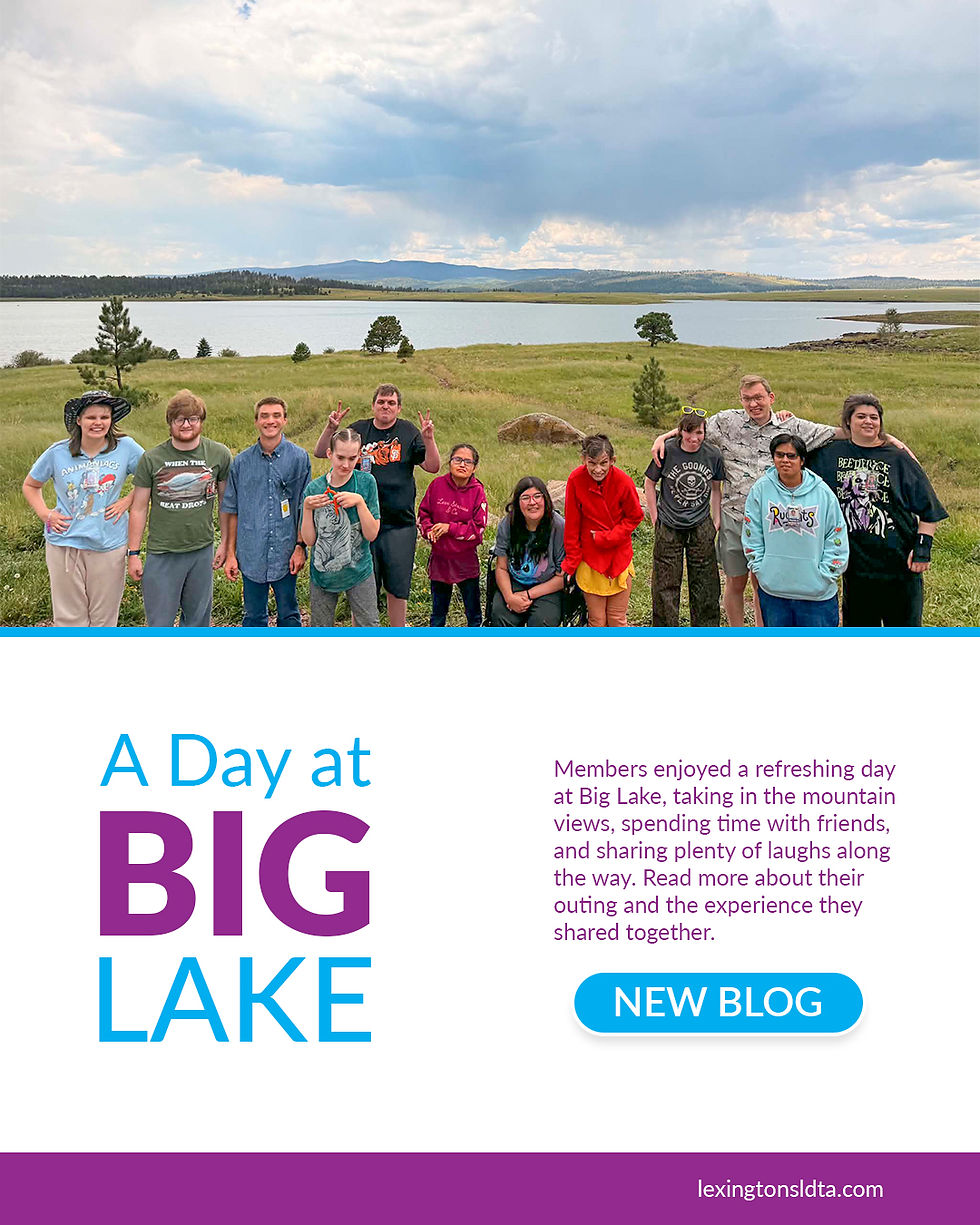
Isolation shrinks lives. Community expands them. Lexington Services DTA intentionally incorporates community-based activities that help adults with special needs stay connected to the world around them. Whether that means local outings, shared activities, or group-based experiences, participants are encouraged to engage beyond the walls of the program.
Research from the National Institutes of Health shows that community participation improves mental health outcomes and self-esteem in adults with disabilities. Feeling seen and included matters.
Parents often notice that when their adult child has a place to go, people to see, and a routine that feels meaningful, behavior improves and confidence grows. Purpose changes everything.
Support for Parents and Caregivers
One of the most overlooked benefits of an adult day program is what it gives parents back.
Time to work.Time to rest.Time to breathe.
Knowing your adult child is safe, engaged, and supported allows parents to step out of constant crisis mode. It creates space for balance and sustainability.
Lexington Services DTA understands that families are part of the care team. Communication, transparency, and collaboration help parents feel informed and supported rather than shut out.
This partnership matters, especially after years of being deeply involved in every detail of school-based services.
Planning Ahead: What Parents Should Consider Early
If your child is approaching adulthood, planning early can make a major difference.
Start researching adult day programs before high school exit. Waitlists are real, and early applications matter. Connect with the Arizona Division of Developmental Disabilities and ask about eligibility and timelines. Tour programs in your area and ask specific questions about structure, staffing, and daily activities.
Most importantly, imagine adulthood not as an ending, but as a transition. With the right support, it can be a powerful one.
Frequently Asked Questions
What is an adult day program for adults with special needs?
An adult day program provides structured daytime support for adults with disabilities. Programs typically focus on life skills, social interaction, community access, and daily routine in a supervised environment.
When do services end after high school for students with disabilities?
School-based services usually end at age 18 or 21, depending on eligibility. After that, families must transition to adult service systems, which are not automatically guaranteed.
Are there adult day programs in Show Low, Arizona?
Yes. Lexington Services DTA is an adult day program in Show Low, Arizona, that supports adults with special needs through structured programming and community engagement.
How do adult day programs help prevent skill regression?
They provide consistent routines, opportunities to practice daily living skills, and social interaction, which help maintain and build upon skills developed during school years.
How do I know if my adult child qualifies for an adult day program?
Eligibility often depends on diagnosis, functional needs, and enrollment with the Arizona Division of Developmental Disabilities. Programs like Lexington Services DTA can help guide families through the process.
What should I look for in an adult day program?
Look for structure, trained staff, individualized support, community integration, and clear communication with families. A good program should feel supportive, not restrictive.
A Future With Support, Not Gaps
The adult support gap is real. The statistics prove it. The stories confirm it. But it does not have to define your child’s future.
With programs like Lexington Services DTA in Show Low, Arizona, adulthood can still be full of growth, connection, and possibility. Structure can continue. Skills can be strengthened. The community can expand.
And you, as a parent, do not have to carry it alone. The next chapter does not have to be a cliff. It can be a bridge.
Interested in learning more about Lexington Services?
Lexington Services DTA is an adult day program in Show Low, Arizona, that provides structured daytime support, community engagement opportunities, and skill-building activities for adults with special needs.
Through weekly outings, social interaction, and life skills development, our program promotes independence, confidence, and meaningful community participation in a safe and supportive environment.
If you are a parent or caregiver of an adult with special needs in the Show Low area and would like to learn more about our adult day program, we invite you to schedule a tour and see Lexington Services DTA in person. We would love the opportunity to show you how our team supports choice, connection, and meaningful daily experiences for every member.


Comments