
What to Look for in an Adult Day Program in Arizona


Looking for an adult day program in Arizona can bring up a surprising number of questions. You may be comparing schedules, activities, locations, transportation, staffing, support needs, and plenty of other practical details. Somewhere in the middle of all that information, though, there is an even more important question: Does this feel like a place where the person I care about can have meaningful days?
There is no universal checklist that can answer that question for every family. Adults with developmental disabilities are individuals, with their own personalities, preferences, communication styles, strengths, routines, interests, and support needs. A program that feels like a fantastic fit for one person may not be the right environment for another.
That is actually a good place to begin. You do not have to find the program that looks best on paper. You are trying to find a program that makes sense for the individual.
Choosing an Adult Day Program in Arizona Starts With the Individual
Families already bring valuable knowledge into this process. You know the person you are supporting. You probably know which environments tend to bring out their personality, which situations can be challenging, what captures their interest, and where they may be ready for additional opportunities to grow.
As you explore programs, consider how much effort is made to learn those things too. Does the program want to understand the individual's interests, goals, preferences, communication style, strengths, and support needs? Is there room for people to participate differently, or does everyone seem expected to move through the same day in exactly the same way?
Individualized support does not mean every activity has to be completely different for every participant. It means the person does not disappear inside the program. Their preferences still matter. Their choices still matter. Their goals still matter.
Look Beyond a Full Activity Calendar
A busy calendar can look impressive. There are outings here, crafts there, cooking on Wednesday, exercise on Thursday, and enough colorful activities to make anyone feel productive just reading the schedule. But the number of activities only tells part of the story.
A meaningful day is not necessarily the day with the most things packed into it. What matters is whether activities create opportunities for participation, enjoyment, skill building, decision-making, communication, creativity, connection, or simply trying something new.
Sometimes an activity may look fairly simple from the outside. A group cooking project, a trip to the library, a game, a creative project, or even a dance break can still create opportunities to follow directions, communicate preferences, interact with others, practice patience, make choices, or experience success.
That is why it can be helpful to ask not only, "What activities do you offer?" but also, "What do participants have an opportunity to experience or practice through those activities?"
That second question can tell you much more.

Consider How Independence Is Supported
Independence is a big word, and it can mean very different things for different people. It does not have to mean doing everything without assistance. For many adults, greater independence may mean being able to make more choices, communicate a preference, complete part of a task, follow a familiar routine, navigate a community setting with greater confidence, or ask for help when it is needed.
A supportive adult day program should be able to recognize those different versions of progress. The goal is not to remove support simply because independence sounds good. The goal is to provide appropriate support while still making room for the individual to practice what they can do for themselves.
When visiting a program, look at the little moments. Are participants given opportunities to choose? Are they encouraged to contribute? Do staff step in immediately, or do they allow time for someone to work through a task when appropriate? Are personal goals reflected in everyday activities?
Those details can reveal a lot about how a program approaches growth.
Look at Life Beyond the Program Building
A program building can offer structure, familiarity, and a comfortable home base, but adulthood does not happen only inside four walls. Community participation can give people opportunities to use skills in places where those skills naturally matter.
A library visit, for example, can involve making choices, interacting with others, following community expectations, exploring personal interests, and becoming more comfortable in a public setting. An outdoor trip may involve preparing for a change in routine, traveling with a group, communicating needs, enjoying recreation, and participating in a shared experience.
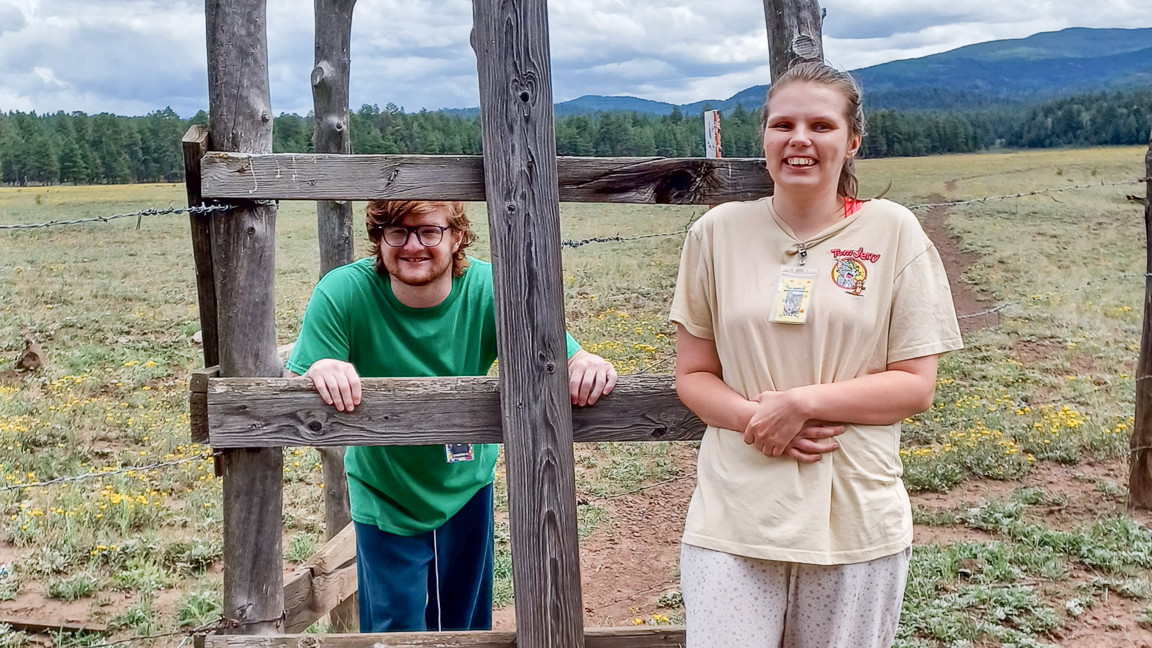
Lexington Services DTA members have participated in experiences throughout the White Mountains, including library activities, local educational destinations, outdoor outings, and community events. Those experiences are fun, but they can also create natural opportunities for communication, confidence, flexibility, decision-making, and social connection.
When exploring an adult day program, ask how the surrounding community fits into the program. Are outings simply occasional entertainment, or are participants given meaningful opportunities to experience and engage with the places around them?
Pay Attention to Social Opportunities and Belonging
"Socialization" appears on a lot of program descriptions, but being in the same room with other people is not automatically the same thing as feeling connected.
Meaningful social opportunities can happen in plenty of ways. Some people enjoy joining a group activity and being right in the middle of everything. Others may build relationships more gradually through familiar routines, shared interests, small conversations, or simply becoming comfortable participating alongside other people.

A supportive environment should leave room for those differences rather than treating social success as one specific behavior everyone needs to master.
As you visit programs, notice what interaction actually looks like. Do people appear comfortable? Are there natural opportunities for members to laugh together, help one another, work on something together, or share an experience? Do staff help facilitate connection without making every interaction feel forced?
Belonging can be difficult to measure on a brochure, but it can be one of the most meaningful parts of someone's day.
Consider Structure, Routine, and Flexibility
Routine can be valuable. Knowing what comes next can make a day feel more comfortable and manageable, particularly for someone who benefits from predictability. At the same time, a meaningful life usually includes some variety too.
A thoughtful program can offer both. There can be familiar routines and expectations while still making room for special activities, new experiences, seasonal events, community outings, personal choices, and the occasional change of pace.
It can be useful to ask what a typical week looks like and then ask what makes one week different from another. The answer can help you understand whether the program has a consistent rhythm without becoming so rigid that every day feels exactly the same.
And when plans change, because plans occasionally do, ask how staff help participants navigate that change. Flexibility is a life skill too, and it is often developed through support and experience rather than expectation alone.
Notice How Staff Communicate and Connect
Activities matter. The building matters. Schedules and transportation certainly matter. But the people providing day-to-day support can have an enormous effect on what the program actually feels like.
Pay attention to how staff speak with participants and how they speak about them. Do you hear people being described primarily by diagnoses and limitations, or do staff also know their personalities, interests, preferences, strengths, accomplishments, and wonderfully specific quirks?
Respect often shows up in small interactions. It can be heard in someone's tone of voice, seen in whether a person is given time to respond, and felt in whether staff appears to genuinely know the people they support.
Families may also want to ask how communication works when something important happens. You probably do not need a play-by-play of every Tuesday afternoon, but knowing who to contact, how concerns are handled, and how meaningful updates are shared can make a big difference.
Questions to Ask When Visiting an Adult Day Program
A program visit is not an interrogation, and nobody needs to arrive carrying a clipboard like they are conducting a surprise inspection. Still, having a few questions in mind can help you get past the tour and understand how the program actually works.
You may want to ask:
What does a typical day and week look like?
How are activities selected?
How do you learn about each participant's interests and goals?
How do you accommodate different communication and support needs?
What opportunities do participants have to make choices?
How are life skills incorporated into the day?
How often do participants access the community?
How are outings selected?
How do staff encourage social interaction without forcing participation?
How does the program communicate with families and support teams?
What happens if someone does not want to participate in a particular activity?
How are changes in needs, interests, or goals addressed?
The answers matter, but so does what you notice while you are there. Watch how the space feels. Observe how people interact. Consider the noise level, the pace of the environment, and the kinds of activities taking place. Most importantly, consider how the individual you are supporting responds to the setting. Sometimes fit is found in the details.

Finding an Adult Day Program in Show Low, Arizona
For families in Show Low and throughout the White Mountains, location is part of the decision, but local access can mean more than a shorter drive. A program that actively participates in its surrounding community can help members become more familiar with local resources, destinations, activities, and experiences.
Lexington Services DTA in Show Low supports adults with developmental disabilities through structured daily programming, life skills activities, creative experiences, social opportunities, personalized support, and community participation. Members have opportunities to spend time both at the program and throughout the surrounding White Mountains community.
Those experiences have included learning at local libraries, enjoying outdoor destinations such as Hawley Lake, participating in community events such as the White Mountains Fishing Derby, exploring local history, and taking part in plenty of activities back at Lexington as well.
There is no single outing or activity that defines a good adult day program. What matters is the bigger picture created by all of those experiences: opportunities to participate, make choices, connect with people, practice skills, enjoy the day, and continue discovering what someone is capable of.
Finding the Right Fit Is Personal
Choosing a program can involve a lot of practical considerations, but eventually the decision becomes personal. Can you picture your family member being comfortable here? Can you see opportunities for them to participate in ways that make sense for them? Is there room for their personality, interests, strengths, and goals?
You do not have to walk into the process already knowing every answer. Asking questions, touring programs, talking with the person you support, and connecting with the professionals already involved in their services can help the picture become clearer.
The goal is not simply to find somewhere to spend the day. It is to find an environment where the day itself can mean something.
For families exploring adult day services in Show Low or the White Mountains, Lexington Services DTA welcomes the opportunity to answer questions, introduce you to the team, and show you what a typical day can look like. Scheduling a tour can give you the chance to see the program firsthand and decide whether Lexington feels like a good fit for your family.
Frequently Asked Questions
What should I look for when choosing an adult day program?
Consider the individual's support needs, interests, communication style, goals, and comfort with the environment. Families may also want to look at staffing, daily routines, life skills opportunities, community participation, social experiences, communication with families, and how much choice participants have throughout the day.
Are all adult day programs in Arizona the same?
No. Programs can differ significantly in their environment, activities, staffing, community involvement, transportation, daily structure, and the kinds of support they are equipped to provide. Visiting programs and asking specific questions can help families compare those differences.
Why are community outings important in an adult day program?
Community experiences can create natural opportunities to practice communication, decision-making, flexibility, social interaction, safety awareness, and other everyday skills. They can also simply give participants opportunities to enjoy their community, explore interests, and share experiences with other people.
Can families tour Lexington Services DTA before deciding?
Yes. Families interested in Lexington Services DTA in Show Low can contact the program to ask questions and schedule a tour. Visiting in person can help families learn more about the environment, activities, staff, and overall approach before deciding whether the program may be a good fit.


Comments